BLOG
10 Power Recliner Chair Buying Tips for Global Buyers
Buying a Power Recliner Chair is no longer a simple choice between fabric, color, and price. Global buyers must assess comfort, motor performance, electrical compatibility, safety documentation, delivery conditions, and after-sales support. A chair may look impressive in a showroom, yet fail when its footrest stops halfway or its adapter does not match local voltage.
Industry reports show why careful evaluation matters. Grand View Research identifies rising demand for home comfort furniture, supported by aging populations and increasing residential spending. Fortune Business Insights also reports continued growth in the global furniture market, with technology and ergonomic functions shaping product development. These reports do not measure every Power Recliner Chair equally. Their categories often overlap, so buyers should avoid treating market forecasts as absolute facts.
Real-world details matter more than impressive specifications. Check the seat depth against your leg length. Test whether the headrest supports your neck without forcing your chin forward. Listen for uneven motor noise. Measure the fully opened chair beside walls, tables, and heating vents. Small gaps can prevent costly returns.
Look beyond the product page.
A reliable supplier should explain motor ratings, upholstery composition, warranty limits, replacement-part availability, and applicable certification requirements. Regional standards may differ, so documentation must be verified before purchase. The IEC 60335-1 safety framework provides a useful reference for household electrical appliances, but compliance claims still require supporting records.
The following ten buying tips help global purchasers compare chairs with greater confidence. They also expose uncomfortable details, including hidden shipping costs, unclear warranties, and features that sound useful but add little daily value. Good buying decisions are rarely perfect. They are carefully checked, realistically measured, and open to reconsideration.
Understanding Power Recliner Types and Core Functions
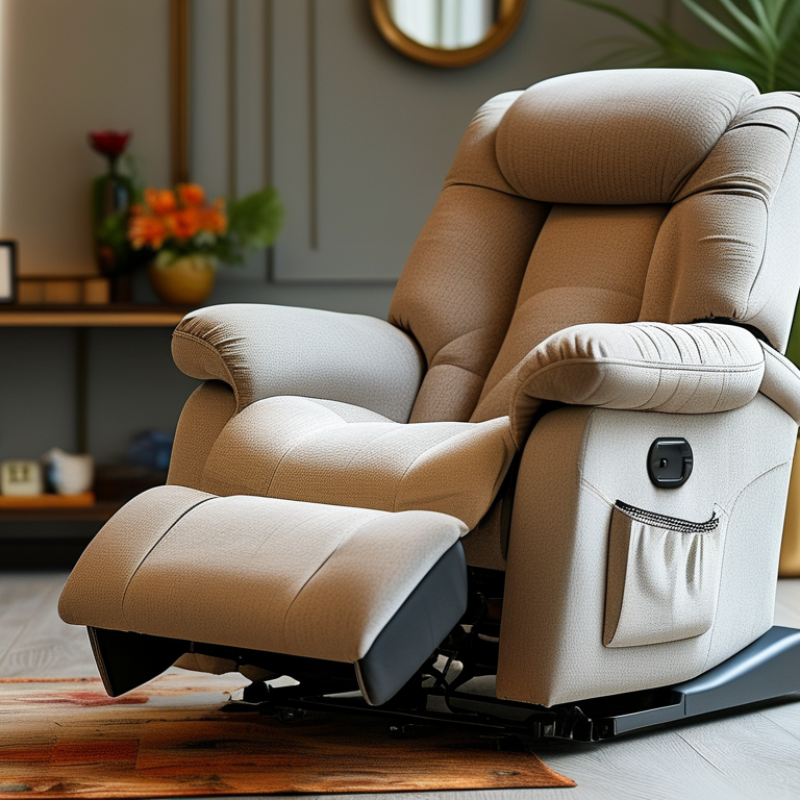
Power recliners differ more than their similar shapes suggest. A single-motor model usually moves the backrest and footrest together. It is simple, affordable, and often easier to maintain. A dual-motor chair adjusts the back and footrest independently. This helps users find a more precise sitting position. Some buyers prefer zero-gravity positioning for relaxed pressure distribution, while others need a lift recliner for safer standing support.
Wall-hugger designs need less rear clearance, which matters in compact rooms. Check the required distance before ordering. Core functions include powered reclining, adjustable headrests, lumbar support, USB charging, memory positions, and emergency battery backup. These features sound useful, but comfort depends on the frame, padding, and control layout. I once focused too much on remote functions and overlooked seat depth. That mistake made long sitting uncomfortable. Measure the user, not only the room. A tall person may need extended leg support, while a shorter user may prefer a shallower seat.
Global buyers should verify voltage, plug type, electrical certification, and local service options. A chair designed for one power system may require a compliant transformer or different configuration. Confirm this with the supplier in writing. Also inspect the warranty terms for motors, wiring, upholstery, and replacement parts. Remote controls can fail. Cables can loosen. No chair is perfect, so practical repair access deserves attention alongside appearance and movement range.

10 Power Recliner Chair Buying Tips for Global Buyers
Understanding Power Recliner Types and Core Functions
This chart compares the core functions typically associated with major power recliner configurations. A value of 1 means the function is normally available in that configuration, while 0 means it is generally not part of the basic design. Buyers should confirm the exact motor layout, voltage, dimensions, control system, warranty, and safety certifications for each product before placing an order.
Assessing Comfort, Size, Materials, and User Support
Tip 1: Sit for ten minutes and check lumbar support.
Tip 2: Test the footrest without forcing your knees upward.
Tip 3: Measure your doorway, lift, room, and wall clearance before ordering. A beautiful chair is useless if delivery stops outside.
Tip 4: Compare the seat width with the user’s shoulder and hip space.
Tip 5: Check the fully reclined length, especially for taller users.
Tip 6: Examine the upholstery closely. Breathable fabric may suit warm climates, while treated leather-like materials can simplify cleaning. Ask how the material handles spills, sunlight, and daily friction.
Tip 7: Inspect the frame, seams, padding, and moving joints. These details often reveal construction quality better than showroom appearance.
Tip 8: Confirm the motor’s noise level and movement speed. Quiet operation matters during nighttime use. I learned this the hard way.
Tip 9: Verify voltage compatibility, plug requirements, and permitted electrical standards for your country. Use qualified installation support when necessary.
Tip 10: Study the warranty, spare-parts policy, assembly guidance, and response times. User support should cover real problems, not only sales questions. Request manuals in a language your household understands. Check weight capacity carefully. Comfort remains personal, and online ratings cannot replace a practical trial. Reconsider the purchase if the controls feel confusing or the chair demands awkward reaching.
Checking Motors, Controls, Safety, and Electrical Compatibility
10 Power Recliner Chair Buying Tips for Global Buyers
Checking Motors, Controls, Safety, and Electrical Compatibility
A power recliner should move smoothly, without grinding, hesitation, or sudden stops. Ask the supplier how many motors operate the backrest, footrest, and headrest. Separate motors usually provide finer positioning, but they may require more maintenance. Listen during testing. Excessive noise can indicate weak gearing or poor alignment. Check the lifting capacity, duty cycle, and thermal protection rather than trusting attractive specifications alone.
Tips: Test every movement several times. Confirm that the remote responds quickly and returns to a neutral position. Wired controls often suit shared spaces because they are harder to misplace. Wireless controls look cleaner, but batteries can fail unexpectedly. Examine button labels closely, especially for older users. I once overlooked a small control delay; it made precise adjustment frustrating.
Electrical compatibility deserves careful checking for every destination. Verify voltage, frequency, plug type, grounding, and the permitted operating range on the rating label. A plug adapter cannot change voltage. A transformer may also be unsuitable for motor loads. Request test reports, wiring diagrams, and protection details before ordering. Look for overload protection, thermal cutoffs, pinch-resistant movement, and emergency release options. Safety features should be demonstrated, not merely listed. Local conformity requirements can differ, so confirm them with a qualified importer or electrician. Even experienced buyers sometimes assume a universal plug means universal compatibility. It does not.
| No. | Buying Checkpoint | What to Verify | Reference Data or Practical Requirement | Why It Matters | Evidence to Request Before Purchase |
|---|---|---|---|---|---|
| 1 | Motor Type and Quantity | Identify whether the chair uses one motor or separate motors for the backrest and footrest. | 1 motor: linked movement 2 motors: independent movement The exact motor count should match the advertised adjustment functions. | Independent motors generally provide more positioning flexibility, while a single motor may simplify operation and servicing. | Product specification sheet, motor quantity, adjustment diagram, and photographs of the motor assembly. |
| 2 | Motor Load and Duty Cycle | Check the rated lifting capacity, operating time, duty cycle, noise information, and protection against overload or overheating. | There is no universal motor rating for all recliners. The motor, mechanism, and chair frame must be tested together for the stated user-weight capacity. | A motor that is suitable for the mechanism but not for the declared load can lead to slow movement, overheating, premature failure, or unsafe operation. | Rated user capacity, duty-cycle specification, overload protection details, endurance-test report, and service instructions. |
| 3 | Movement Range and Mechanical Stops | Confirm the maximum reclined angle, footrest extension, lift or tilt function, and the locations of mechanical end stops. | The actual movement range is model-specific. The chair should stop automatically at its designed end positions without forcing the motor. | Clear movement limits help prevent mechanism damage, pinch hazards, and collision with walls or nearby furniture. | Dimension drawing showing upright and fully reclined positions, clearance requirements, and end-stop test results. |
| 4 | Hand Control and User Interface | Check button labeling, cable length, connector security, emergency stop behavior, USB outlets, and whether the control is wired or wireless. | Controls should provide clear directional functions and should not activate unintentionally. A wired control normally requires strain relief at the connector. | Clear controls reduce user error and make the chair easier to operate for older users or people with limited mobility. | Control-panel layout, user manual, connector photographs, cable-bend test information, and replacement-control availability. |
| 5 | Anti-Pinch and Entrapment Protection | Inspect gaps around the footrest, scissor mechanisms, reclining joints, moving panels, and the space beneath the chair. | Moving parts should have suitable guarding, controlled movement, and clearly defined safety gaps. Children and pets should be kept away from moving mechanisms. | Reclining furniture can create pinch, crush, or entrapment points if gaps and moving parts are not properly controlled. | Risk assessment, pinch-point inspection records, safety photographs, and instructions for safe use near children and pets. |
| 6 | Electrical Input Compatibility | Match the power supply input to the destination country and confirm voltage, frequency, plug type, and connector polarity. | Common residential supply systems include 100–127 V AC and 220–240 V AC; supply frequency is commonly 50 Hz, 60 Hz, or both. The exact product label must be checked. | A chair designed for a different input voltage may not operate correctly and can create electric-shock, fire, or equipment-damage risks. | Photograph of the power-adapter label showing input voltage, frequency, output voltage, output current, polarity, and plug configuration. |
| 7 | Low-Voltage Power Supply | Verify whether the chair uses an external AC/DC adapter or an internal power supply, and confirm the motor-side output rating. | Many powered recliners use an external low-voltage DC adapter. Output values are product-specific and must not be substituted unless voltage, current capacity, polarity, connector, and safety approvals are compatible. | The adapter is a critical safety component. An incorrect replacement can cause overheating, malfunction, or damage to the motor controller. | Adapter datasheet, output-voltage and current rating, polarity symbol, temperature rating, replacement-part number, and applicable conformity documents. |
| 8 | Electrical Safety and EMC Compliance | Check electrical-safety testing, electromagnetic compatibility, insulation, leakage current, grounding or double insulation, and the destination-market requirements. | Relevant requirements may include the applicable national or regional adoption of IEC/EN 60335-1, requirements for motor-operated adjustable furniture such as IEC/EN 60335-2-116 where applicable, and applicable EMC regulations. | Compliance testing helps reduce the risk of electric shock, overheating, unwanted movement, and interference with nearby electronic equipment. | Current test reports, declarations of conformity, certification marks required by the destination market, EMC test results, and technical file references. |
| 9 | Battery Backup and Power-Failure Behavior | Determine whether the chair has a battery backup, how many emergency cycles are available, and what happens during a mains failure. | Battery backup is optional and varies by model. If included, the battery chemistry, nominal voltage, charging method, storage life, and replacement interval should be documented. | A backup system may allow the user to return to a safer position during a power interruption, but it does not replace safe manual procedures. | Battery specification, charging instructions, emergency-operation test, replacement procedure, and transport requirements for the battery. |
| 10 | Installation, Clearance, and After-Sales Support | Measure doorways, lift access, wall clearance, floor space, shipping dimensions, assembly points, and access to replacement parts. | Required clearance is model-specific. Zero-wall or wall-hugger designs still require the manufacturer’s stated rear and side clearance. | Correct installation prevents collision, unstable positioning, cable damage, and restricted movement. Spare parts can significantly extend product service life. | Packaging dimensions, assembled dimensions, installation manual, warranty terms, spare-motor availability, control replacement process, and service contact procedure. |
Comparing Durability, Warranty Coverage, and Maintenance Needs
Power Recliner Chair Buying Tips for Global Buyers
Durability starts beneath the upholstery.
I have learned that a quiet showroom motor proves very little.
- Check the steel frame joints.
- Ask for the motor’s rated cycles.
- Inspect cable protection near moving hinges.
- Confirm the chair supports your actual body weight, not an optimistic estimate.
BIFMA X5.4 provides useful durability and load-testing benchmarks for lounge seating. Request the test report, rather than trusting vague “heavy-duty” language.
I still misjudge comfort sometimes.
Warranty coverage needs equal scrutiny.
- Separate coverage for the frame, motor, control, transformer, and fabric.
- Ask whether labor and return freight are included.
- Confirm the warranty period in your country, not only the seller’s headquarters.
The U.S. Federal Trade Commission advises buyers to examine written warranty terms, exclusions, and repair procedures carefully.
A five-year frame warranty may hide a one-year motor warranty. That difference matters.
Maintenance affects lifetime cost.
- Choose replaceable remotes and accessible power modules.
- Keep the mechanism clear of toys, cords, and pet hair.
- Ask whether spare parts remain available after discontinuation.
The Global E-waste Monitor 2024 recorded 62 million tonnes of electronic waste in 2022. Only 22.3% entered documented recycling channels. Modular repairs can reduce unnecessary disposal.
Wipe leather or fabric according to its care code, and never overload the footrest. I sometimes prefer simpler controls; fewer electronic parts can mean fewer future failures.
Evaluating Suppliers, Certifications, Shipping, and Total Cost
10 Power Recliner Chair Buying Tips for Global Buyers
A power recliner is not only furniture; it is an electrical product with moving parts. Evaluate the factory before comparing quotations. Request ISO 9001 records, recent inspection reports, and traceable motor test results. Confirm whether electrical certifications match your destination market. For example, North American buyers may require recognized safety testing, while European shipments may need applicable conformity documentation. The exact requirement depends on the product configuration and destination.
Tips: Ask for a live factory video, sample carton, wiring diagram, and spare-parts list. Check whether the supplier can repeat the same foam density, stitching, and motor performance. A polished sample can hide inconsistent mass production. That mistake is easy to make.
Shipping deserves equal attention. UNCTAD reports that over 80% of world merchandise trade by volume moves by sea. Delays, port handling, and damaged cartons can therefore change your real cost. The World Bank’s 2023 Logistics Performance Index collected responses from 4,090 trade professionals across 139 countries. It highlights customs, infrastructure, shipment quality, and timeliness as practical logistics factors.
Tips: Calculate landed cost, not factory price. Include tooling, packaging upgrades, inspection, ocean freight, insurance, duties, local delivery, and warranty reserves. Ask for Incoterm-based quotes and compare identical assumptions. A low quote may exclude delivery risks. Build a small contingency; my own costing reviews often underestimate replacement parts and after-sales labor. Supplier stability matters too, so verify production capacity, export history, and response times before signing.