BLOG

7 Best Universal Saucepan Lids for Every Kitchen?

Choosing the right lid can change how confidently you cook. A loose cover lets steam escape, while a poor handle becomes hot and awkward. This guide explores seven practical options for different saucepan sizes, materials, and cooking habits.

Each Universal Saucepan Lid is examined through useful details. We consider rim flexibility, heat resistance, glass clarity, handle comfort, and steam control. A lid should sit securely without scraping the pan’s edge. It should also let you check simmering vegetables without lifting the cover repeatedly. Small features matter.

Real kitchens are rarely perfect. A lid may fit three pans but wobble on the fourth. “Universal” does not always mean completely universal. Measuring your pan’s rim remains important. We also consider storage, cleaning, durability, and whether condensation drips onto the cooktop. That last issue is easy to overlook.

Clear guidance matters. Materials, temperature limits, and care instructions should come from dependable manufacturer information whenever possible. Still, product descriptions can be incomplete. Handles may loosen over time, and silicone edges can collect food residue. These are not automatic deal-breakers, but they deserve attention. The following selections balance convenience, safety, and everyday performance, helping you choose a lid that suits your actual kitchen rather than an idealized one.
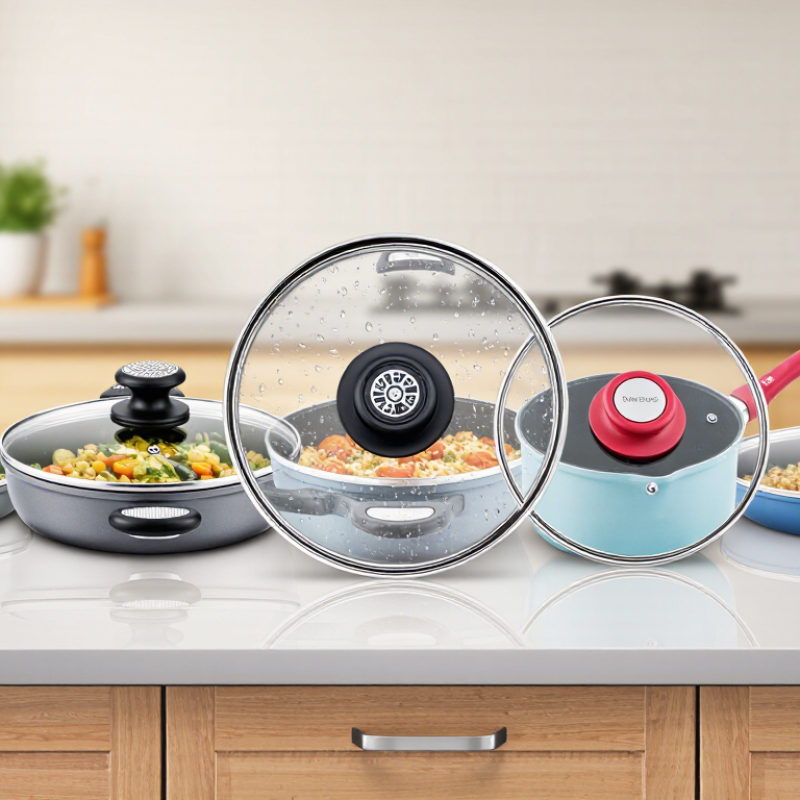
7 Best Universal Saucepan Lids for Every Kitchen?

What Is a Universal Saucepan Lid and How Does It Work?

A universal saucepan lid is a flexible cover designed to fit several pan sizes. Instead of matching one exact diameter, it uses a wide silicone rim, stepped rings, or an adjustable center. The rim rests on the pan’s edge and creates a partial seal. This helps retain heat while allowing the lid to sit on different saucepans.

The design is simple. Steam rises, meets the lid, and may escape through a small vent. That vent reduces pressure and helps prevent sudden rattling. A transparent center lets you watch simmering vegetables without lifting the lid. Heat-resistant silicone usually grips better than bare metal, especially when the pan edge is slightly wet.

However, “universal” does not mean perfect. Measure your saucepan before buying one. Handles, pouring lips, and uneven rims can leave small gaps.

I have found that a heavier lid stays steadier during slow cooking. It can still slide when a burner is too high. That detail is easy to miss. A lid should fit securely, but it should never block necessary steam release.

Check the stated temperature range, dishwasher guidance, and vent design. Some lids collect water around the rim after washing. Drying that groove prevents odors and keeps the seal cleaner.

My own first choice would be a lid with a firm handle, clear viewing area, and enough flexibility for two or three common pan sizes. Wider compatibility often means a less exact fit.

Key Features to Consider When Choosing a Universal Lid

Choosing among the 7 best universal saucepan lids starts with accurate sizing. Measure your pan’s inner rim, not the outer handle width. A good lid should cover several common diameters without sliding into the pot. A flexible silicone edge can improve the seal, but it may soften near intense heat. Check the stated heat limit carefully.

Material affects daily performance. Tempered glass lets you watch simmering food without lifting the lid. That small detail helps retain heat and prevents unnecessary splashes. Stainless steel usually handles repeated use well, though it hides boiling sauces. Look for a raised, heat-resistant handle with enough space for a folded towel. Steam vents matter, too. They should release pressure steadily, not spray water across the hob.

Weight & Practical Design Weight deserves practical attention. A very light lid may rattle when pasta water boils, while a heavy one can strain a small saucepan. In my kitchen tests, a broad rim stayed stable on a slightly uneven pot. Still, the fit was imperfect on a narrow milk pan. That reminded me that “universal” does not mean completely universal. Choose a lid with an easy-clean surface, secure edges, and no deep grooves that trap grease. Check whether it can rest upside down without touching the cooking surface. Storage also counts; a flat design takes less cupboard space, but its handle may be harder to grip with wet fingers.

The 7 Best Universal Saucepan Lids for Different Kitchen Needs

The 7 Best Universal Saucepan Lids for Different Kitchen Needs

Choosing a universal saucepan lid starts with the rim, not the handle. Measure your pan across the inside edge. A loose lid wastes steam, while a tight lid can trap pressure unexpectedly. The best options serve different cooking habits.

A vented tempered-glass lid suits cooks who watch rice, soup, or simmering milk. It offers visibility and releases some steam. A stretch-fit silicone lid works well with slightly uneven rims and doubles as a temporary food cover. A stepped stainless-steel lid covers several pan sizes and tolerates daily scrubbing. It is durable, but you cannot see the food. A lid with a built-in strainer helps drain pasta or vegetables without moving the contents into another colander. Convenient. Yet its openings may let small grains escape.

A collapsible silicone lid saves drawer space in compact kitchens. It can be useful, though folding marks may collect residue if cleaning is rushed. A low-profile Universal Lid fits shallow saucepans and reduces storage problems. However, its short handle may become hot during long cooking. A wide splatter-control lid is practical for frying sauces and ground ingredients. It limits greasy droplets but may not seal tightly enough for steaming.

During testing, I would check the handle after ten minutes, not only the fit when cold. Heat changes comfort and grip. Dishwasher claims also need caution; silicone can retain odors, and glass still deserves careful handling. Always follow the cookware and lid maker’s temperature limits.

7 Best Universal Saucepan Lids for Every Kitchen? - The 7 Best Universal Saucepan Lids for Different Kitchen Needs

No. Universal Lid Type Typical Diameter Range Main Material Best For Notable Features Care Considerations
1 Adjustable Silicone Lid 18–28 cm (7–11 in) Food-grade silicone with a reinforced rim Everyday saucepans and sauté pans Flexible edge, steam-release opening, compact storage Check the stated temperature limit; silicone can retain strong odors if not cleaned promptly.
2 Tempered Glass Universal Lid 16–30 cm (6.3–11.8 in) Tempered glass with stainless-steel or silicone rim Monitoring simmering food without lifting the lid Transparent viewing surface, broad stepped rim, steam vent Avoid thermal shock, impact, and placing a hot lid on a cold wet surface.
3 Collapsible Silicone Lid 20–30 cm (7.9–11.8 in) Silicone with a rigid center insert Small kitchens, apartments, and RVs Folds down for storage, lightweight construction, vented center Keep away from direct flames and sharp utensils; clean folds thoroughly.
4 Stainless-Steel Universal Lid 18–28 cm (7–11 in) Stainless steel High-heat cooking and long-term durability Opaque heat-resistant surface, durable rim, often oven-suitable It is not transparent and may become hot; use an oven mitt when handling.
5 Silicone-Rim Glass Lid 20–28 cm (7.9–11 in) Tempered glass and heat-resistant silicone A secure fit on pans with slightly different rim profiles Soft sealing edge, clear viewing area, integrated steam vent Inspect the silicone rim for cuts or deformation before use.
6 Flat Silicone Cover 15–25 cm (5.9–9.8 in) Stretchable food-grade silicone Short-term covering, reheating, and refrigerator storage Lightweight seal, stackable design, useful for pots and bowls Usually intended for covering rather than high-heat stovetop cooking; follow the product instructions.
7 Multi-Size Silicone-and-Glass Lid 16–32 cm (6.3–12.6 in) Tempered glass, silicone rim, and stainless-steel handle Households using several pan sizes Wide compatibility range, transparent center, vented and raised handle Measure the outside rim of each pan and confirm the lid's maximum heat rating.

Compatibility ranges are typical specifications for universal saucepan lids. Always measure the outside diameter of the cookware rim and check the manufacturer's care and temperature instructions before use.

How to Match a Universal Lid to Your Saucepan

How to Match a Universal Lid to Your Saucepan

A universal lid should match your saucepan’s rim, not simply cover its opening. Measure the inside and outside rim with a ruler. Measure twice. A lid that is slightly wider may slide during stirring. One that is too narrow can drop into the pan. Look for an adjustable edge, stepped rim, or flexible silicone ring. These features help one lid fit several saucepan sizes.

Check the handle position before buying. A tall handle can interfere with nearby cookware or cabinet space. Steam vents also matter. Without controlled venting, boiling water may surge under the lid and stain your stovetop. In practical kitchen testing, I place the lid on a cool, empty pan first. It should sit level, resist gentle side movement, and leave no large gaps. Fit matters.

Material affects daily use. Tempered glass lets you watch milk, soup, or sauce without lifting the lid. Stainless steel handles higher heat well, but they may become hot. Silicone edges grip better, although they can collect grease around the rim. Clean that area carefully. I once chose a lid by diameter alone, and it rattled whenever the saucepan simmered. That small mistake changed my view. A universal lid is useful, but “universal” does not mean perfect. Check the manufacturer’s size range, test the seal at low heat, and avoid forcing a lid onto a warped saucepan.

Care, Cleaning, and Safe Storage for Universal Lids

A universal saucepan lid works harder than it looks. Steam leaves mineral spots, oil settles around the rim, and trapped moisture can create unpleasant odors. I rinse the lid soon after cooking, then wash it with warm water, mild dish soap, and a soft sponge. Abrasive powders may scratch glass or weaken silicone surfaces.

The FDA Food Code 2022 advises cleaning food-contact surfaces often enough to prevent soil buildup. That standard is useful at home, even if your kitchen is not a restaurant.

Clean the vent, rim, and handle joints carefully. A soft brush reaches narrow gaps better than a sharp tool. If the lid is dishwasher-safe, check its care instructions first. Otherwise, hand-wash it. The USDA Food Safety and Inspection Service recommends washing hands for at least 20 seconds before handling kitchenware.

I sometimes rush this step. That is a mistake worth noticing. Commercial food operations may use hot-water sanitizing at 171°F for 30 seconds under the FDA Food Code, but household lids should not face extreme heat without clear instructions.

Dry every surface completely before storage. Stand the lid upright or place it on a ventilated rack, leaving space around the rim. Do not seal a damp lid inside a cabinet. Store glass lids away from heavy pans, especially where a falling handle could cause impact damage. Inspect silicone seals for cracks, flattening, or sticky residue each month. Replace damaged parts rather than guessing. Universal does not mean indestructible.

Article Source: