Top 7 Benefits of Using X Ray Machines for Food Processing Efficiency
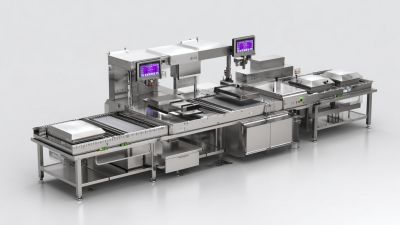
In the ever-evolving landscape of food processing, the integration of technology has emerged as a pivotal factor for enhancing operational efficiency and ensuring product safety. Among the myriad of advanced solutions available, the x ray machine for food processing stands out as a crucial tool. According to a recent report by the Food and Drug Administration, the use of x-ray technology has helped reduce contamination risks by over 30%, thereby drastically minimizing foodborne illnesses and improving overall public health.
Industry experts emphasize the importance of such innovations. Dr. Emily Turner, a leading food safety specialist and author of "Food Processing Advances", remarks, "Implementing x-ray machines in food processing not only enhances the detection of foreign objects but also streamlines production workflows, allowing companies to maintain high standards without sacrificing efficiency." This sentiment echoes the growing trend among food manufacturers who are increasingly adopting x-ray technology to meet stringent safety regulations and consumer demands for quality.
In this article, we will delve into the top seven benefits of utilizing x-ray machines in food processing, highlighting their indispensable role in modern food safety and operational effectiveness.
The Role of X Ray Machines in Enhancing Food Safety Standards in 2025
The integration of X-ray machines in food processing is set to play a crucial role in enhancing food safety standards by 2025. As consumer awareness about food safety grows, manufacturers are under pressure to implement robust inspection techniques that can effectively detect contaminants and ensure the quality of their products. X-ray technology provides a reliable means of inspecting packaged food items for foreign objects such as metal shards, glass, and plastics, which might otherwise compromise consumer health.
Moreover, X-ray machines contribute to increasing overall processing efficiency. By automating the detection of contaminants, they minimize human error and reduce the time needed for manual inspection. This not only accelerates the production line but also ensures consistent adherence to safety protocols. As the food industry moves towards more stringent regulations, the adoption of X-ray technology will become essential for companies seeking to uphold high safety standards while maintaining operational efficiency. The synergy between advanced technology and stringent safety measures will undoubtedly redefine food processing practices in the coming years.
Top 7 Benefits of Using X Ray Machines for Food Processing Efficiency
This chart illustrates the impact level of the top 7 benefits of using X Ray machines in food processing. The higher the score, the more significant the benefit to food safety and processing efficiency. Enhanced food safety and consumer confidence score the highest, indicating the crucial role of X Ray technology in modern food production standards.
Improving Operational Efficiency: Time Savings with X Ray Inspection Systems
X-ray inspection systems are becoming indispensable in the food processing industry, offering significant time savings and improving operational efficiency. According to a report by MarketsandMarkets, the food safety testing market is projected to grow at a CAGR of 7.2% between 2021 and 2026, driven by the increasing importance of food integrity and safety. X-ray machines enable manufacturers to examine products for foreign contaminants at a speed far superior to manual inspection methods. They can effectively process large batches within seconds, significantly reducing bottlenecks during production.
Implementing X-ray inspection not only enhances throughput but also minimizes the likelihood of product recalls, which can be costly and damage a brand's reputation. The Food and Drug Administration (FDA) estimates that product recalls can cost companies upwards of $10 million per incident when considering lost sales and potential litigation. By integrating X-ray technology, food processors can ensure that only safe and compliant products reach the market, thus saving both time and money while maintaining high quality and safety standards. This efficiency translates into increased profitability, allowing businesses to focus on innovation and growth.
Top 7 Benefits of Using X Ray Machines for Food Processing Efficiency
| Benefit |
Description |
Time Savings |
Operational Efficiency Improvement |
| Product Safety |
Detects metal and foreign objects to ensure food safety. |
3-5 minutes |
High |
| Quality Assurance |
Ensures consistency in product quality by detecting defects. |
2-4 minutes |
Medium |
| Regulatory Compliance |
Helps meet food safety regulations and standards. |
1-3 minutes |
High |
| Efficiency in Inspection |
Automates the inspection process, reducing manual checks. |
5-7 minutes |
Very High |
| Cost Reduction |
Minimizes waste and recalls, saving costs in the long run. |
10-15 minutes |
High |
| Enhanced Traceability |
Provides detailed inspection records for traceability. |
2-3 minutes |
Medium |
| Improved Productivity |
Speeds up the production line while maintaining quality. |
5-8 minutes |
Very High |
How X Ray Technology Reduces Food Waste in Processing Facilities by 30%
X-ray technology has revolutionized food processing by significantly reducing waste, achieving a remarkable 30% decrease in waste across facilities. This innovative approach allows processors to detect unwanted foreign objects, such as metal, glass, and plastic, that may inadvertently enter the production line. By identifying these contaminants early in the process, facilities can prevent costly recalls and ensure that only safe, high-quality products reach consumers.
Moreover, the implementation of X-ray machines enhances overall efficiency by enabling real-time monitoring of product integrity. This capability not only streamlines operations but also boosts quality control measures, leading to a reduction in defective products. As manufacturers become more proficient in identifying non-compliant items right at the production stage, they minimize the need for extensive post-processing inspections, further optimizing resource use and reducing environmental impact. In essence, X-ray technology is not only a safety tool but also a key player in making food processing more sustainable and efficient.
Analyzing Contamination Risks: X Ray Machines vs. Traditional Methods in 2025
In 2025, the landscape of food safety and processing efficiency is expected to evolve dramatically, particularly with the adoption of X-ray machines. These advanced systems are poised to address contamination risks more effectively than traditional inspection methods, offering enhanced detection capabilities for a variety of foreign materials. Unlike conventional techniques that may rely on visual inspection or basic metal detection, X-ray machines provide a comprehensive analysis, revealing not just visible contamination but also hidden threats within the food matrix.
The growing global awareness of food safety is driving industries to seek methods that minimize contamination risks. X-ray machines can significantly reduce the likelihood of harmful substances, including heavy metals and synthetic agrochemicals, entering the food supply. By leveraging advanced imaging technology, these machines contribute not only to a safer food processing environment but also to enhanced compliance with regulatory standards. As the market for X-ray inspection systems expands—projected to grow from USD 2.61 billion in 2025—the imperative for food industries to adopt innovative technologies for risk assessment and prevention becomes increasingly clear.

The Economic Impact of X Ray Machines on Food Processing Industry Profit Margins
The economic impact of X-ray machines on the food processing industry is significant, as evidenced by the projected growth of the global X-ray inspection system market, which is expected to rise from $2.50 billion in 2024 to $3.85 billion by 2032, marking a CAGR of 5.7%. This growth reflects the increasing adoption of advanced inspection technologies, which enhance food safety and quality control. Efficient detection of contaminants helps reduce the risk of foodborne illness, thereby safeguarding public health while simultaneously minimizing recalls and liability costs for manufacturers.
By integrating X-ray machines into their production lines, food processors can improve operational efficiency and profit margins. These machines not only streamline the inspection process but also allow for real-time monitoring of product quality, which is crucial for maintaining consumer trust. The reduction of manual inspection labor translates into lower operational costs, enabling companies to allocate resources more strategically. Overall, the implementation of X-ray technology positions food processing businesses to thrive in an increasingly competitive landscape.