BLOG

2026 Top Types of Food Inspection Machines for Global Buyers

As global food production becomes faster and more automated, buyers need inspection systems that match real factory conditions. A food inspection machine is no longer a simple final checkpoint. It can protect product quality, reduce waste, and support reliable traceability across many production lines.

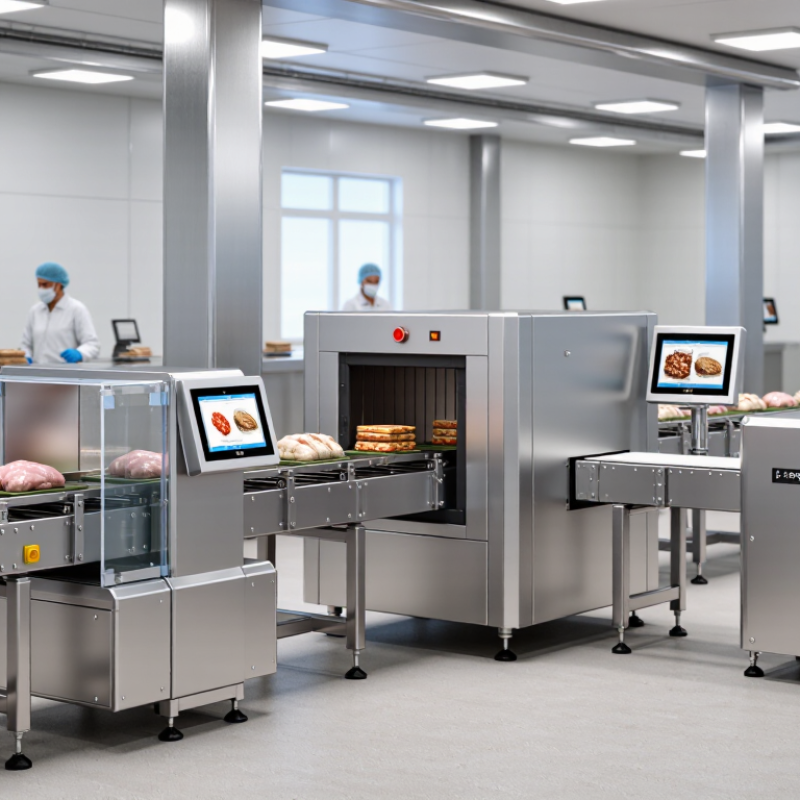
Frank Yiannas, former FDA Deputy Commissioner for Food Policy, said, “Food safety is not a competitive advantage; it is a prerequisite for doing business.” His statement remains highly relevant in 2026. Metal detectors can identify ferrous and non-ferrous contamination. X-ray systems can detect dense foreign materials, missing products, and broken equipment parts. Vision inspection machines can check labels, seals, shape, color, and package damage. Checkweighers help confirm portion accuracy before products reach distribution.

Small details matter.

A chilled chicken line may require washdown-resistant equipment, while a snack factory may prioritize high-speed vision inspection. Powdered products create dust, vibration, and calibration challenges. These conditions can reduce accuracy when buyers focus only on advertised detection limits. That is an easy mistake.

This guide examines the top types of food inspection machine for global buyers in 2026. It compares operating principles, suitable applications, integration requirements, maintenance needs, and practical purchasing concerns. However, no machine replaces trained operators, validated procedures, or regular performance testing. Technology helps. It does not think independently.

Buyers should consider product characteristics, line speed, packaging materials, hygiene design, rejection accuracy, data records, and after-sales support. A cheaper system may become expensive when false rejects interrupt production. Reliable selection requires evidence from factory trials, not attractive brochures alone.
2026 Top Types of Food Inspection Machines for Global Buyers

What Food Inspection Machines Are and How They Support Food Safety

2026 Top Types of Food Inspection Machines for Global Buyers

What Food Inspection Machines Are and How They Support Food Safety

Food inspection machines examine products and packaging during production. They help identify metal fragments, foreign materials, incorrect weights, damaged seals, and visual defects. Common systems include metal detectors, X-ray units, checkweighers, and vision inspection equipment. Each machine addresses different risks. None can replace good hygiene, supplier controls, or a carefully maintained HACCP plan.

In practice, a reliable inspection point needs more than advanced hardware. Operators should test detection performance at scheduled intervals using approved test pieces. They should also record rejected products, equipment alarms, cleaning activities, and corrective actions. A sealed snack pouch may look acceptable but still contain a weak seal. A clear bottle may pass visually but show an incorrect fill level. These small details matter. However, machines can produce false rejects, and staff may overlook repeated alarms. This is an area worth reviewing honestly.

Tips: Match the machine to the product, package, speed, and inspection risk. Check its sensitivity under real production conditions. Keep inspection records easy to audit. Train operators to respond quickly, not simply reset alarms. Review performance after product changes, cleaning, or maintenance. Safety depends on the complete process, not one device.

Main Types of Food Inspection Machines Used in 2026

Food inspection machines in 2026 support safer production, consistent quality, and faster line decisions. Metal detectors identify ferrous and non-ferrous fragments inside packaged or unpackaged products. X-ray systems can detect dense materials, missing components, and some packaging defects. They are useful for sealed foods, but product density can affect sensitivity.

Vision inspection machines examine color, shape, labels, fill levels, and damaged packaging. Checkweighers verify each package against its target weight and can identify underfilled products.

Seal inspection systems examine closures, leaks, wrinkles, and poor alignment. In real production environments, these machines work best when connected with traceable records and controlled rejection systems. No machine catches everything. Poor calibration, vibration, moisture, or changing product temperatures can reduce accuracy.

Tips: Match the machine with the product, package, speed, and expected contaminants. Test it with certified samples at planned intervals. Keep inspection areas clean and document every adjustment. Operators also need practical training, not only screen-based instructions. A machine may appear reliable during installation, yet performance can change after maintenance or seasonal product variations. Review real rejection data regularly, and question unusually low results. That habit often reveals missed setup problems.

How Each Inspection Technology Detects Food Defects

2026 Top Types of Food Inspection Machines for Global Buyers

How Each Inspection Technology Detects Food Defects

Food inspection machines identify different risks, so one technology rarely covers every defect. Metal detectors create an electromagnetic field and sense conductive fragments, such as steel or aluminum. They work well with packaged products, but salt, moisture, and temperature can increase false rejects. X-ray systems measure density differences. They can reveal glass, stones, bones, dense plastics, and missing product inside sealed packs. They also check fill levels and broken components.

Vision inspection uses cameras, lighting, and software to detect color changes, cracks, stains, shape errors, and poor labels. It is precise on visible surfaces. It cannot reliably see defects hidden under food. Near-infrared and hyperspectral systems examine reflected wavelengths. They can identify moisture variation, bruising, foreign plant material, and some composition changes. Results depend heavily on calibration and product consistency. No system sees everything.

The World Health Organization estimates that contaminated food causes about 600 million illnesses and 420,000 deaths each year. USDA Economic Research Service estimates that 15 major foodborne pathogens cost the United States about 15.6 billion dollars annually. These figures support layered inspection, not equipment overconfidence. Buyers should compare detection limits, test-piece records, sanitation design, reject verification, and data traceability. A checkweigher can catch underfilled packs, but weight alone cannot confirm safety. Real production is messier than demonstrations. Test again after changes in humidity, speed, packaging film, or recipe.

Key Buying Factors for Global Food Manufacturers

2026 Top Types of Food Inspection Machines for Global Buyers

Key Buying Factors for Global Food Manufacturers

Global food manufacturers need inspection equipment matched to real product risks, not impressive brochures. WHO estimates that contaminated food causes 600 million illnesses and 420,000 deaths annually. This supports investment in metal detectors, X-ray systems, vision inspection, checkweighers, and seal inspection machines. Each technology sees different defects. Metal detection suits conductive and non-conductive products, while X-ray inspection can identify dense foreign materials and missing components. Vision systems inspect labels, color, shape, and packaging alignment. Not every line needs X-ray.

Buying decisions should begin with a documented hazard analysis. Codex Alimentarius’ General Principles of Food Hygiene, revised in 2022, links inspection controls with HACCP-based risk management. Product moisture, density, temperature, package material, and line speed affect sensitivity. A machine that performs well during a factory trial may struggle after recipe changes. That is an easy mistake.

Global buyers should also examine hygienic design, washdown resistance, calibration access, reject confirmation, and audit-ready data records. False rejects deserve attention. FAO’s State of Food and Agriculture 2022 estimates that 13.2% of food is lost before retail globally. Poorly tuned inspection can increase waste and labor costs. Total cost includes integration, validation, training, spare parts, and local technical support. Connectivity helps, but excessive data can confuse operators. Simple alarms sometimes work better.

2026 Top Types of Food Inspection Machines for Global Buyers - Key Buying Factors for Global Food Manufacturers

Machine Type Primary Inspection Target Typical Detection Capability Suitable Products Main Buying Factors Typical Installation Point Key Limitation
Metal Detector Ferrous, non-ferrous and stainless-steel metal contamination Metal particles in packaged or unpackaged food; performance depends on product effect, aperture size and orientation Bakery goods, meat, poultry, snacks, dairy, frozen foods and dry ingredients Product conductivity, sensitivity, belt width, reject confirmation, washdown rating and validation procedure After processing or before final packing Generally cannot reliably detect non-metallic materials such as glass, stone or bone
X-Ray Inspection System Dense foreign bodies, missing products and package defects Glass, mineral stone, calcified bone, metal, dense plastic and density-related defects Canned foods, meat, poultry, seafood, ready meals, confectionery and products in foil packaging Product density, package size, radiation-safety controls, image resolution, software functions and service support After sealing or at the end of the packaging line Higher purchase and integration cost; detection depends on density contrast and product geometry
Checkweigher Underweight, overweight and missing-item conditions Weight outside preset limits; can support fill-level and batch-consistency control Packaged snacks, bakery products, dairy, frozen foods, beverages and prepared meals Legal metrology requirements, weighing range, line speed, belt stability, load-cell protection and data logging After filling and sealing, before case packing Does not identify the type or location of contamination
Vision Inspection System Appearance, labeling, coding, shape and assembly defects Missing or damaged labels, incorrect print, seal defects, color variation, shape defects and foreign objects visible to the camera Bottles, trays, cartons, cans, pouches, baked goods and produce Camera resolution, lighting design, inspection field of view, recipe changeover, barcode or OCR capability and false-reject rate Before or after labeling, sealing and case packing Performance can be affected by reflections, condensation, variable lighting and product presentation
Leak Detection System Microleaks, seal-channel leaks and package integrity failures Gas or pressure loss, seal defects and package deformation, depending on the test method Modified-atmosphere packs, vacuum packs, pouches, trays and flexible packaging Package material, test sensitivity, product temperature, test cycle time, non-destructive operation and changeover needs Immediately after sealing The correct method depends strongly on package format, internal gas and leak size
Optical Sorting Machine Color, size, shape and surface-quality defects in bulk materials Discolored pieces, mold-affected pieces, stones, shells, stems and other visually distinct materials Rice, grains, pulses, nuts, seeds, dried foods, fruits and vegetables Camera or sensor configuration, material throughput, air-ejector response, feed uniformity and product-specific trials After cleaning, grading or drying, before final processing Defects with little visual or spectral contrast may not be separated consistently
Near-Infrared (NIR) Analyzer Composition and quality parameters Estimation of moisture, protein, fat and other composition-related parameters after calibration Grains, flour, animal feed, edible oils, dairy powders and processed ingredients Calibration model, reference-laboratory data, sample presentation, temperature control and compliance documentation Receiving, in-process testing or laboratory quality control Requires product-specific calibration and does not replace microbiological testing
Ultraviolet or Fluorescence Inspection Surface contamination and selected residues Certain fluorescent residues, surface contamination indicators and hygiene-related visual abnormalities Processing surfaces, packaging areas, selected produce and hygiene verification samples Light wavelength, surface condition, validation method, operator training and environmental controls Hygiene verification or targeted surface inspection Not a universal detector for all pathogens or contaminants
Global buying checklist: Confirm product trials, required detection performance, applicable food-safety and electrical standards, hygienic design, cleanability, line speed, reject verification, data connectivity, operator training, spare parts availability and total cost of ownership before purchase. Actual performance must be validated with the specific product, package and production conditions.

How to Select the Right Machine for Different Food Products

2026 Top Types of Food Inspection Machines for Global Buyers

How to Select the Right Machine for Different Food Products

Choosing food inspection equipment starts with the product, not the machine catalogue. Dry powders and snacks often suit metal detectors, especially when conductivity is low. Wet, salty, or wrapped foods can reduce metal detector sensitivity. X-ray systems are usually stronger for dense products, glass fragments, stones, and missing items. For fresh produce, vision inspection can identify bruises, discoloration, shape defects, and incorrect labels. Checkweighers help confirm fill levels, but they cannot replace contamination detection. Small details matter.

The Food and Agriculture Organization reported that 14% of food is lost between harvest and retail. Better inspection can reduce avoidable waste, although poor calibration may create new waste. The World Health Organization estimates that contaminated food causes 600 million illnesses and 420,000 deaths annually. These figures support risk-based control, not automatic investment in the most expensive system. Codex Alimentarius recommends hazard analysis and validated controls under its General Principles of Food Hygiene, updated in 2022.

Test the real product before purchasing. Include temperature, packaging film, moisture, product orientation, and line speed. A machine that performs well with an empty pouch may struggle with a wet sauce pouch. Ask for sensitivity results, rejection accuracy, data records, and cleaning procedures. Validate performance at startup and during production. One uncomfortable truth remains: laboratory results may not predict every factory condition. Choose equipment that operators can verify, clean, and maintain daily.

2026 Top Types of Food Inspection Machines for Global Buyers

How to select the right machine for different food products: this chart compares the typical primary inspection functions of widely used food inspection technologies.

Metal detectors are commonly selected for metallic contamination, while X-ray systems can also identify dense contaminants such as glass, stones, and calcified bone. Optical sorting and vision inspection are suitable for appearance, color, foreign-material, packaging, seal, and label checks. Checkweighers are used for underweight or overweight product control. Actual performance depends on product composition, packaging, line speed, moisture, density, and required sensitivity.